


Italy Trains vs Rental Cars: What’s Actually Best

Some links in this post may earn me a small commission, at no extra cost to you. Think of it as a tiny thank-you for helping you avoid packing regret, bad shoes, and panic-shopping linen at the airport.
If you are planning a trip to Italy, one of the most practical decisions also ends up shaping the feel of the trip more than people expect: should you take Italy trains vs rental cars?
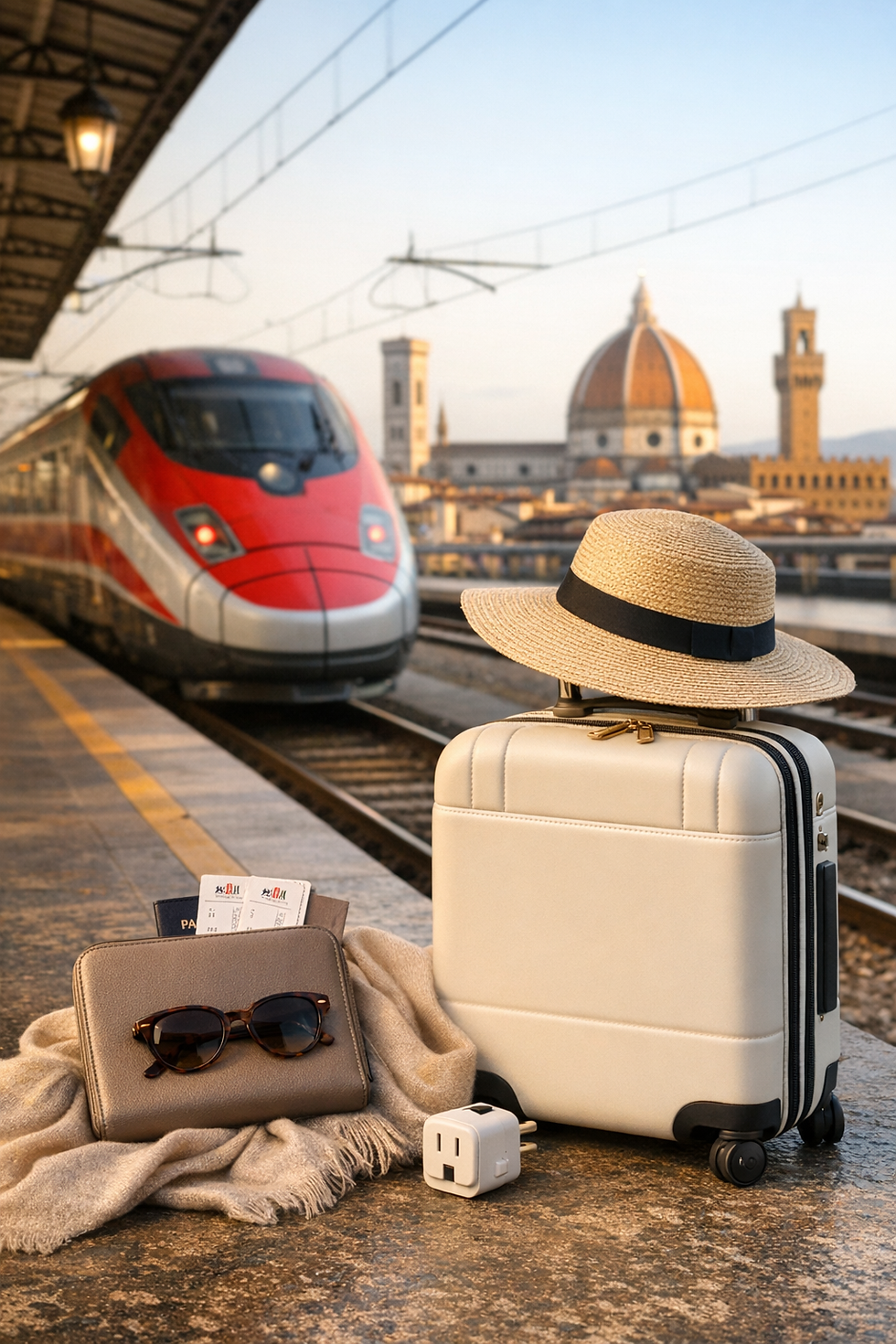
Both can be wonderful. Both can also be inconvenient in the wrong itinerary.
I have done Italy both ways, and my honest answer is that this is not really about which option is universally better. It is about which one suits the version of Italy you want to experience.
If your trip is built around the classics like Rome, Florence, Venice, and Milan, trains are often the smarter choice. They are efficient, comfortable, and in many cases, far easier than trying to drive into places that were never designed with modern cars in mind. But if your trip is about the countryside, smaller towns, beach stops, vineyard lunches, or the freedom to pull over somewhere unexpected because it looks beautiful, a car opens up a different kind of Italy. One that feels more spacious, more spontaneous, and sometimes more memorable.
That is the real answer: the best choice depends on your route, your travel style, and how you want the trip to feel once you are in it.
Start Here: Plan the Route Before You Pick the Transportation
Before you decide between trains and rental cars, it helps to understand the shape of the trip itself. Italy gets much easier when the route, pacing, hotel moves, transportation days, and must-book moments are organized before the suitcase comes out.
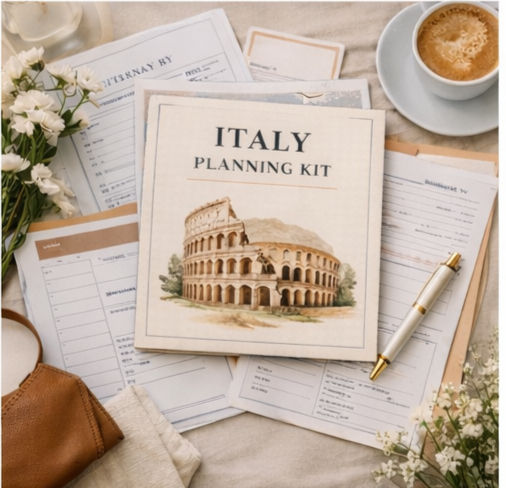
That is exactly why I created the Italy Planning Kit. It helps you map the trip more clearly from the beginning, so decisions like trains vs. rental cars feel less like guesswork and more like part of a smarter itinerary.
The Short Answer
For many Italy trips, especially first-time itineraries, trains are the easiest choice for major cities and rental cars are best reserved for the countryside or smaller destinations where flexibility matters.
That usually looks like this:
Take trains for Rome, Florence, Venice, Milan, Bologna, and Naples
Rent a car for Tuscany, Puglia, Sicily, Umbria, parts of the Dolomites, and smaller coastal or rural areas
Use both when the itinerary calls for it
This does not need to be an all-or-nothing decision. In fact, some of the best Italy itineraries are built on a combination of both.
Want the Italy Planning Timeline?
If you are still figuring out when to book trains, hotels, restaurants, tours, and the pieces that make Italy feel smoother, I created a free Italy Booking Timeline to help you plan the trip in the right order. It gives you a clearer sense of what to book early, what can wait, and what not to leave until the last minute. Because Italy is much more enjoyable when you are not trying to solve everything at once.
Why This Decision Matters More Than It Seems
Transportation is not just logistics. In Italy, it changes the rhythm of the trip. It affects how much you pack, how tired you feel, how ambitious your itinerary can be, and whether the day unfolds in a relaxed way or starts to feel like a puzzle. It also changes the tone of the experience.
Train travel can make Italy feel seamless and elegant. You settle in, watch the landscape pass by, and arrive in the middle of a city ready to start the day.
A car can make Italy feel more open-ended. You can stop when something catches your eye, take a detour, linger over lunch, and build a day around curiosity rather than a timetable.
I always think this choice is worth making thoughtfully, because the better the transportation fits the trip, the better the trip tends to feel.
When Trains Are Actually Best in Italy
Trains are especially good for city-based itineraries
If your trip is centered around cities like Rome, Florence, Venice, Milan, or Bologna, trains are often the clear winner. These routes are well connected, easy to book, and generally far more enjoyable than trying to navigate traffic, parking, and restricted zones in historic city centers.
In cities like these, a car can quickly go from sounding useful to feeling like dead weight.
Trains are wonderful with kids
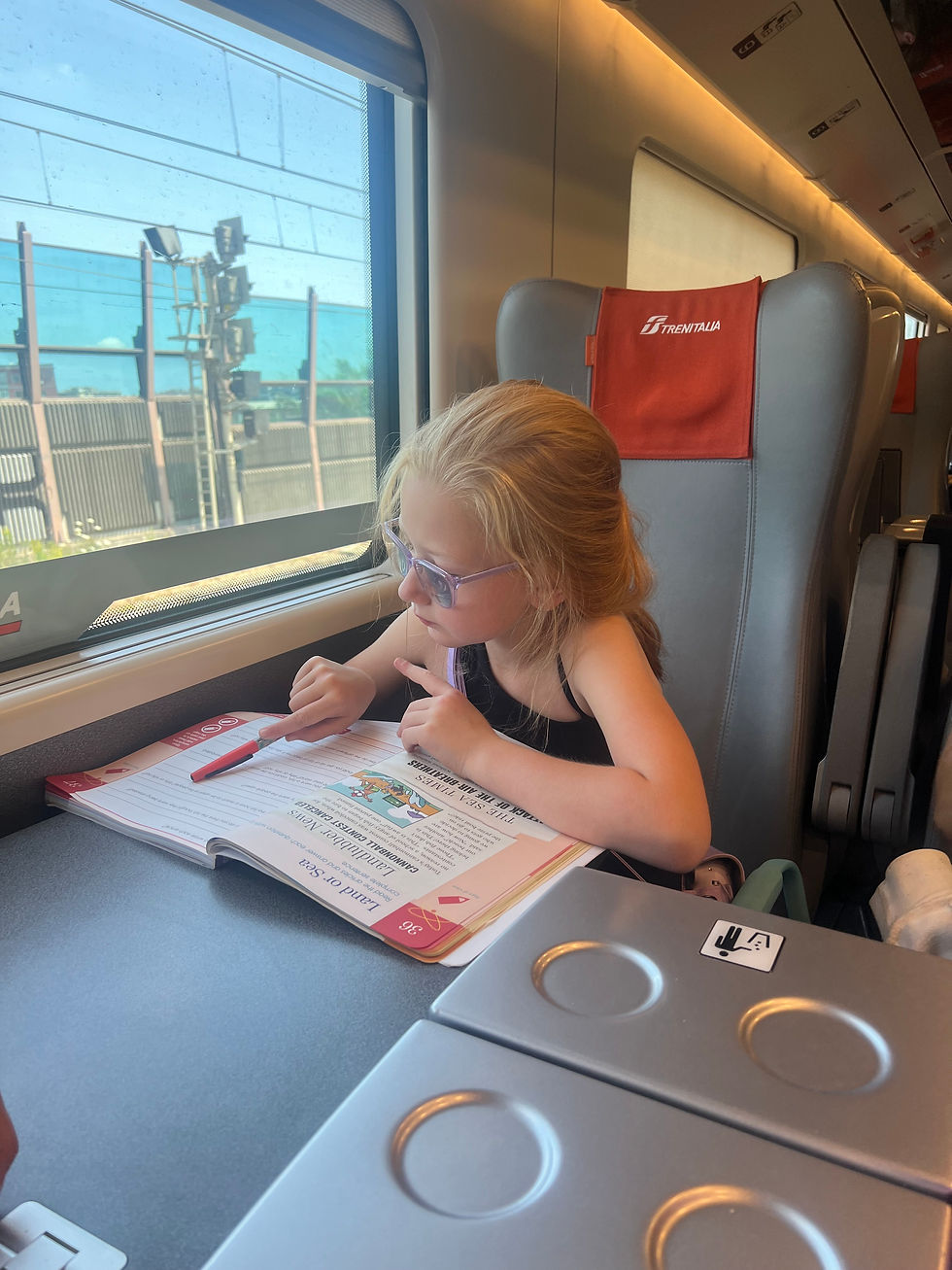
This is one of the biggest advantages, and one that matters more than people always realize while planning.
Trains are genuinely great when you are traveling with children. They have a little freedom to move around, the experience feels fun and different, and the travel itself becomes part of the day rather than just a transfer you have to get through.
As the adult, you also get to be present with them. You are not focused on directions, traffic, tolls, or trying to interpret a sign while everyone is already hungry. You can talk, snack, read, look out the window together, and let the journey feel like part of the memory.
Trains are easier for adults too
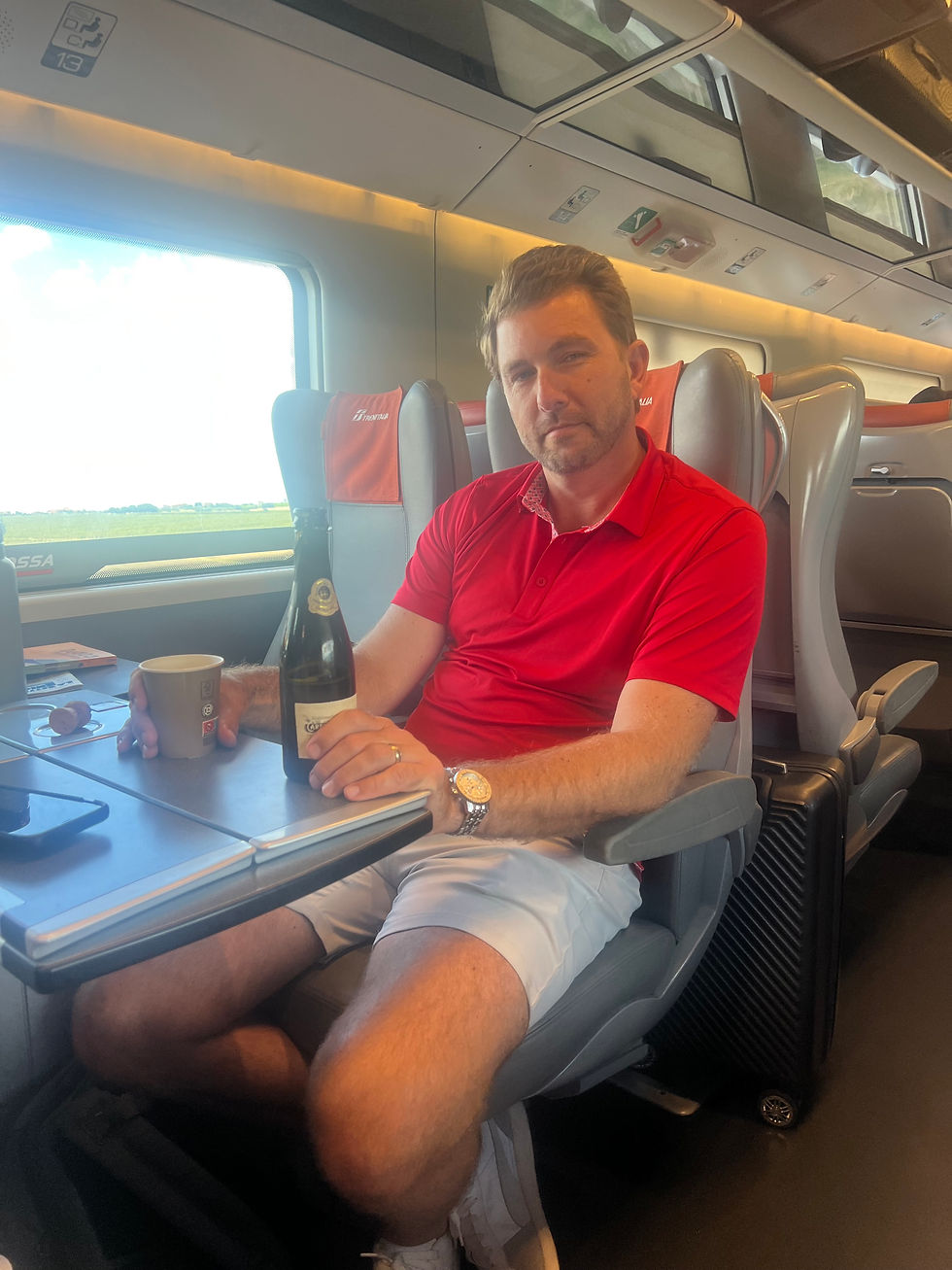
Even without kids, trains have a real luxury to them when the route makes sense. You can rest. You do not have to worry about a wrong turn, losing cell signal, or trying to reroute on unfamiliar roads. You can answer emails, reorganize your plans, have a quiet coffee, or even close your eyes for a few minutes if the ride is long enough.
There is a certain kind of ease in that. It is one of the reasons train travel in Italy can feel so polished when it is paired with the right itinerary.
Trains work best when you are traveling light and smart
This is where style and practicality need to meet. Train travel is easiest when your luggage is streamlined, your essentials are close at hand, and you are not wrestling oversized bags across platforms or cobblestones.
A thoughtfully packed carry-on and a reliable adapter make all the difference here. This is one of those moments where the right travel pieces are not just nice to have. They actively improve the trip.
Styled & Miles tip: If your Italy trip includes multiple train segments, pack for movement. Think polished layers, shoes you can actually walk in, and luggage you can lift without turning the platform into a scene.
The Travel Essentials That Make Italy Easier
Train days in Italy are much better when your setup is streamlined. A carry-on you can actually lift, a personal item that keeps your essentials close, a reliable adapter, a portable charger, packing cubes, and a few small things that keep the day from becoming unnecessarily chaotic.
I pulled together my Italy Travel Essentials Edit with the pieces I would prioritize before a trip that includes trains, cobblestones, hotel transfers, and full days on the move.

When a Rental Car Is Actually Best in Italy
A car is worth it when the destination is the point
There are parts of Italy where a car changes everything in the best way. Tuscany, Sicily, Puglia, Umbria, rural wine country, smaller beach destinations, and certain mountain or countryside stays all become easier, fuller, and more interesting when you are not tied to train schedules and secondary transfers.
This is especially true if you are staying somewhere beautiful outside a town center. A countryside hotel, an agriturismo, or a tucked-away villa often feels far more relaxing with your own car.
A car adds freedom that trains simply cannot
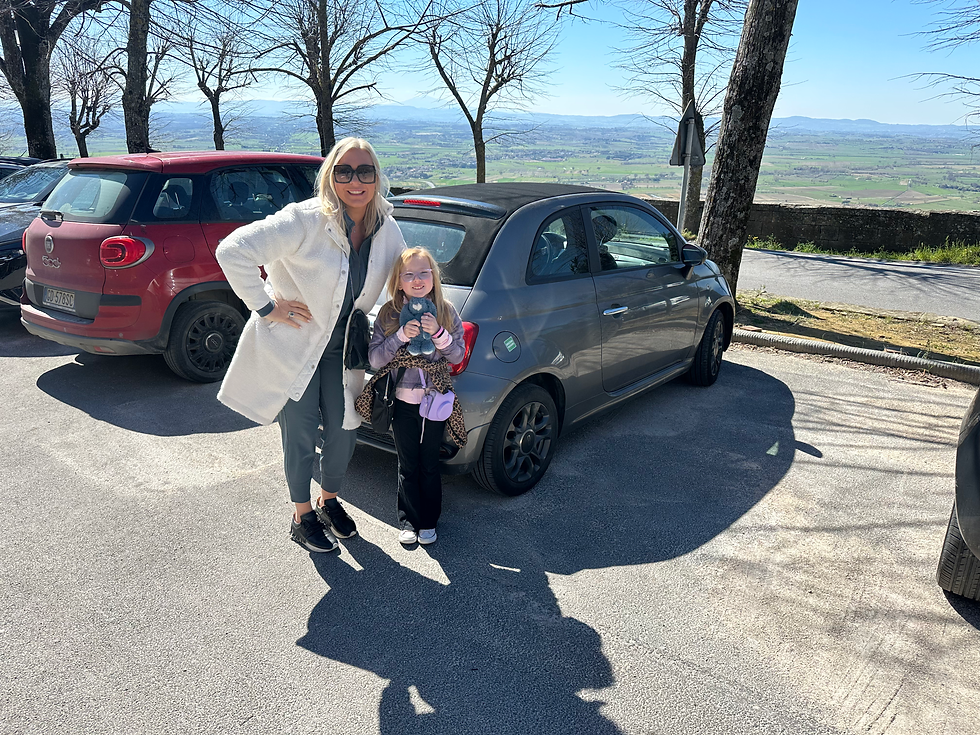
This is the real appeal. You can change plans. You can pull over. You can stop in a town that was not on the itinerary. You can take the longer route because it looks prettier. You can linger at lunch without checking the time every twenty minutes. And sometimes that flexibility leads to the best part of the trip.
I have done Italy by car too, and it can be incredibly fun. Sometimes getting lost is half the adventure. Sometimes that wrong turn or unplanned stop becomes the story you remember most.
One of the truly best meals I have had in my life happened this way, in the smallest little town in the middle of Sicily while traveling by car. It was not a place I had planned around. It was not one of the polished names people always mention. It was just one of those Italy moments that happened because the day had room for surprise. That is the argument for a car in one memory.

For the Meals You Don’t Want to Leave to Chance
Some of the best meals in Italy happen when the day has room for surprise. But it still helps to know what to look for, what to order, and how to recognize the kind of meal worth slowing down for.
My Italy Food Guide is designed to help you eat with more confidence, whether you are in a major city, a small town, or the kind of place you only found because you had a car and followed your instincts..
A car suits certain kinds of travelers especially well
If your version of Italy includes scenic drives, layered countryside days, boutique hotel stays, spontaneous detours, and a little more freedom in the structure of the day, a car may feel more aligned with the trip you actually want. There is a romance to that version of Italy, but there is also practicality. Some places are simply easier to reach and enjoy by car.
The Real Downsides of a Rental Car
This is the part that deserves honesty.
Parking can be difficult to nearly impossible in some cities
This alone is enough to make me skip a car for many city-heavy itineraries. Historic centers were not built around modern driving. Parking can be expensive, limited, or frustratingly far from where you are staying. Even when you find it, it is not always simple.
Luggage can become a problem
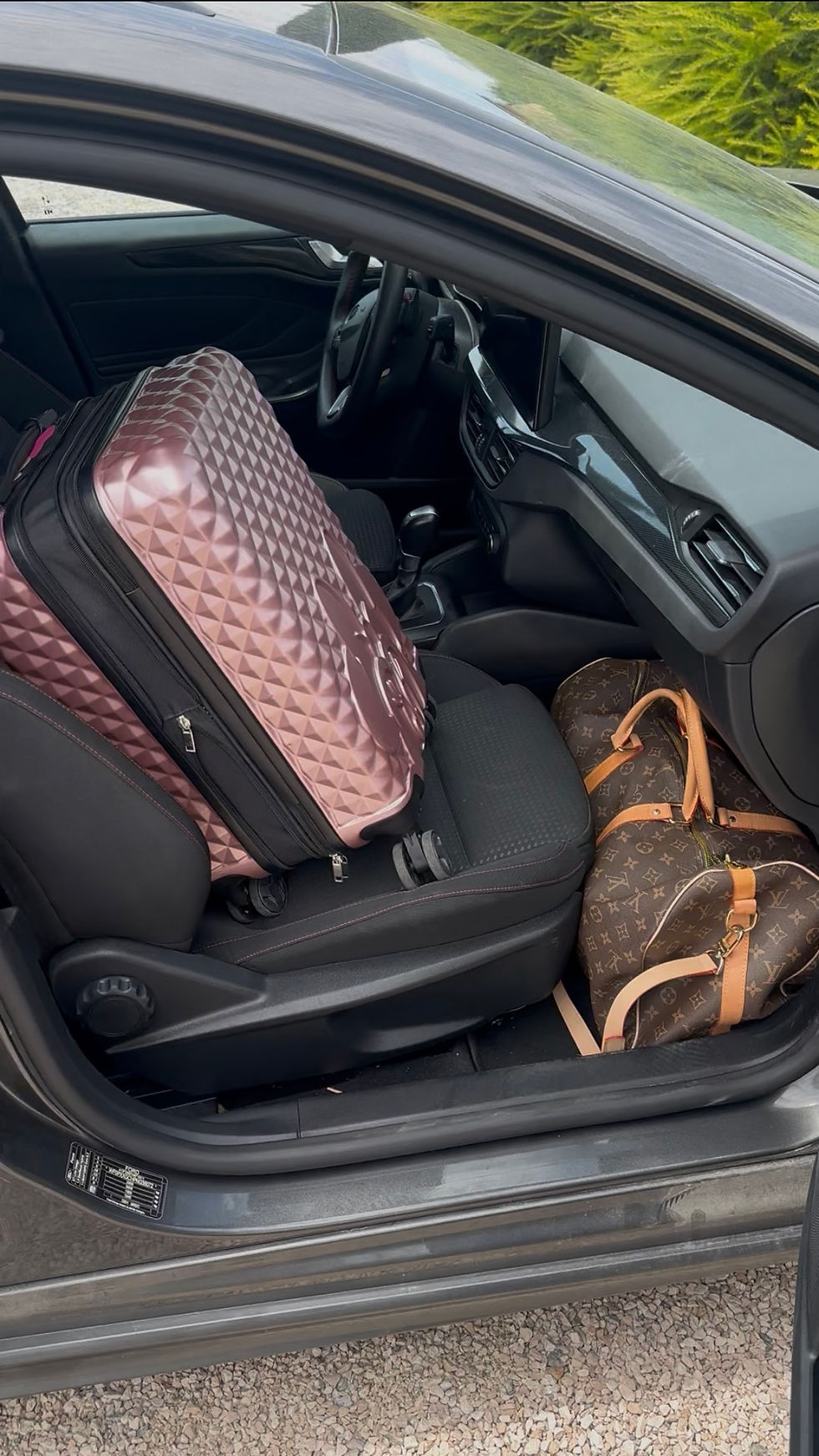
People assume a car means easier luggage. Sometimes it does. Sometimes it means trying to fit more than expected into a smaller trunk than you are used to in the U.S. If you are traveling with family or moving between hotels, this matters.
Some roads are not especially intuitive

Italy has roads and city layouts that can feel charming in theory and mildly maddening in practice.
Two-way streets can sometimes feel one-way-ish. Narrow lanes can look like suggestions rather than actual roads. Historic towns were clearly designed for another era, and you feel that quickly behind the wheel. That does not mean driving is not worth it. It just means it is best to go into it with open eyes.
The Real Downsides of Trains
Trains are often easier, but they are not perfect.
You are on the schedule, not your own
A train works beautifully when it aligns with your day. Less beautifully when you are tired, delayed, managing a lot of luggage, or trying to coordinate several moving parts.
Some routes are much easier than others
High-speed train routes between major cities are the polished version everyone talks about. Regional connections are a different story. They can be slower, less direct, and less seamless than people expect.
Station-to-hotel still matters
A train can get you into the city beautifully, but you still need to get from the station to where you are staying. That is usually manageable, but it is worth remembering that trains are not exactly door-to-door.
The Bag You Carry All Day Matters
Even when trains make Italy feel easy, the in-between moments still matter: getting from the station to the hotel, keeping passports and tickets close, moving through crowded platforms, and heading straight into the city before your room is ready.
I pulled together the travel bags I reach for when I want something secure, lightweight, and polished enough to carry from train station to lunch without looking like I packed for a field trip.

Italy Trains vs Rental Cars by Travel Style
For first-time Italy trips
Trains are often the better choice, especially if your trip includes the major cities and you want the experience to feel smooth rather than overcomplicated.
For countryside or slower luxury travel
A rental car is often worth it. If you want scenic flexibility, tucked-away hotels, and room for spontaneous stops, the car starts to make much more sense.
For family trips

Trains can be especially strong. Kids can move around, the experience feels different and exciting, and the adult energy required is often lower. That alone can make the entire trip feel more pleasant.
For travelers who value freedom over structure
A car is often the better fit.
For travelers who want ease and simplicity
Trains usually win.
My Honest Recommendation
For most Italy itineraries, I would not frame this as trains or rental cars. I would frame it as where each one belongs.
Use trains where Italy does trains beautifully: major city routes, high-speed connections, and urban itineraries where driving adds more friction than value.
Use a car where Italy opens up best by road: countryside stays, smaller towns, coastal detours, and the kind of days where you want the freedom to follow what looks interesting.
That is usually the smartest combination.
A train from Rome to Florence. A few days without a car in the city. Then a rental for Tuscany. That kind of structure tends to work very well. It keeps the trip efficient where efficiency helps, and flexible where flexibility makes the experience better.
Common Mistakes to Avoid
Renting a car for a city-only itinerary
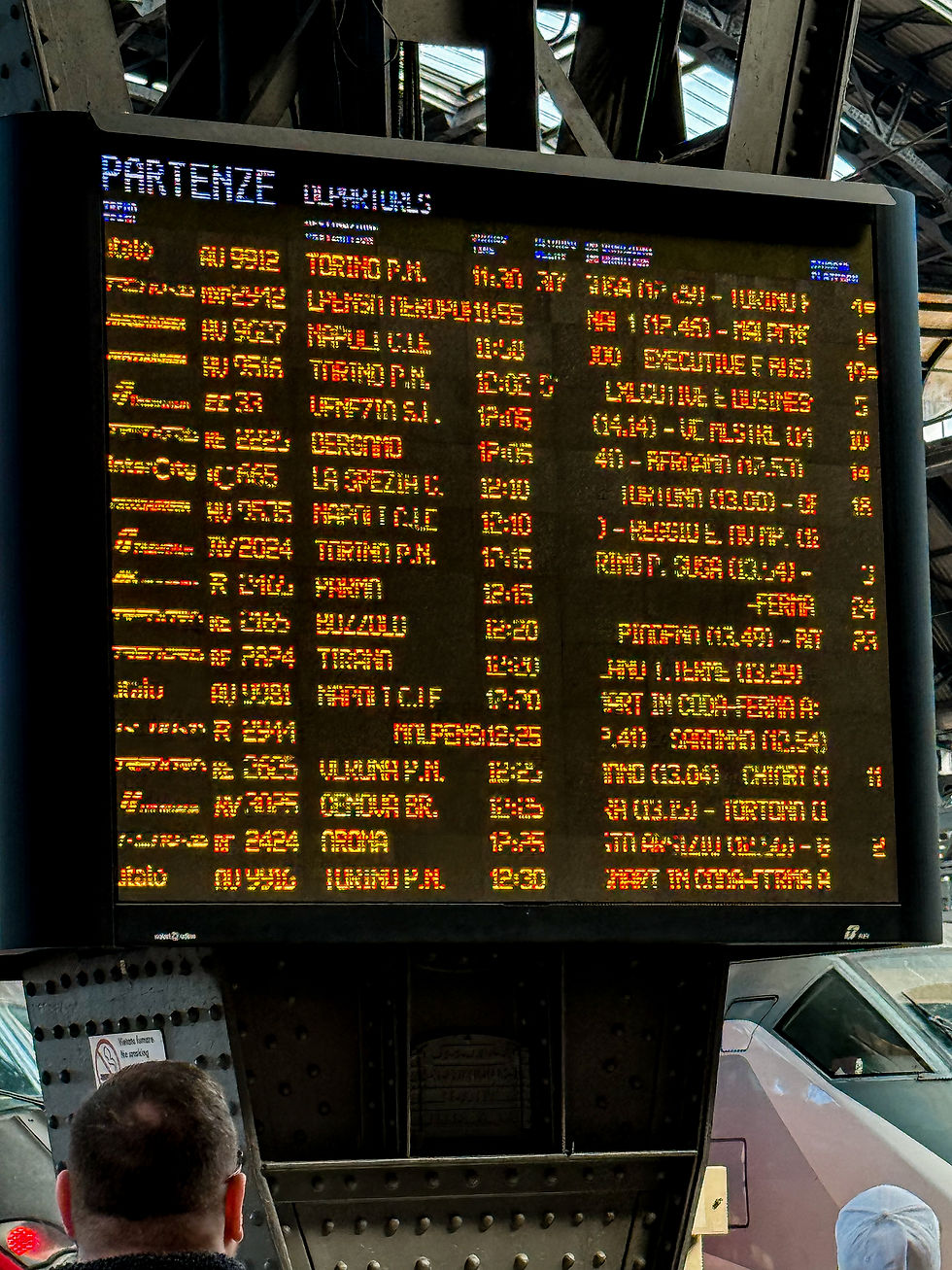
If your trip is mainly Rome, Florence, Venice, and Milan, you probably do not need one.
Assuming trains make every part of Italy easy
They do not. Some regions are far better by car.
Packing like transportation does not matter
It does. Train trips and road trips each reward a different kind of packing strategy.
Choosing based on theory instead of your actual itinerary
This is the big one. The right answer depends on the trip you are actually taking.
Final Verdict: What’s Actually Best?
If your Italy trip is centered around the major cities, trains are often the best choice. They are efficient, less stressful, and in many cases far more enjoyable than trying to drive and park in places that were never meant for cars.
If your trip is about the countryside, smaller towns, Sicily, Puglia, Tuscany, or the kind of day that gets better when you can pull over and follow your instincts, a rental car may be exactly what makes the trip special.
And if you want the most balanced answer, it is this:
Italy is often best when you use both well.
That is how I think about it. Not in absolutes, but in terms of how to travel well.
The goal is not just getting from one place to another. The goal is choosing the version of the trip that feels smoother, more enjoyable, and more like the Italy you actually want to experience.
If You Want the Organized Version of All of This
If you are trying to decide between trains, rental cars, city days, countryside stays, hotel moves, and how much movement your trip can realistically handle, this is exactly where the Italy Planning Kit helps.
It gives you a more organized way to map the route, pace the itinerary, think through logistics, and make the decisions that shape how the trip actually feels once you are there.
Because Italy planning should be exciting. It should not feel like you need a second glass of wine just to figure out whether you can get from Florence to a villa in Tuscany without accidentally creating a transportation problem.


Comments