


How to Plan an Italy Trip, Step by Step

Updated: May 27
Some links in this post may earn me a small commission, at no extra cost to you. Think of it as a tiny thank-you for helping you avoid packing regret, bad shoes, and panic-shopping linen at the airport.
A polished, practical guide to planning Italy well from the start.
Italy is one of those trips people dream about for years, then suddenly find themselves trying to piece it together from a few saved links, a half-finished notes app, and a rising sense that they should have started sooner.
I understand.
Italy is beautiful, generous, and remarkably easy to overfill. The planning challenge is rarely that people choose the wrong places. It is that they try to choose all of them. And because a trip to Italy is usually a meaningful investment, planning matters. That is true whether your version of Italy looks like a lake-view suite and perfectly timed transfers or a carefully considered first trip built around smart choices and beautiful priorities. Either way, it is an investment of money, time, energy, anticipation, and expectation. I want a trip with that much weight behind it to feel thoughtful. Not rushed. Not cobbled together. Thoughtful.

After more than 20 trips to Italy, I can tell you this with confidence: the best Italy trips are not the ones with the longest list of stops. They are the ones planned well enough to feel smooth, stylish, and spacious once you arrive.
That means choosing the right pace, the right route, the right mix of cities and downtime, and the right practical tools before you ever leave home.
If you have been wondering how to plan an Italy trip step by step, this is where I would begin.
Quick Answer: How Do You Plan a Trip to Italy?
To plan a trip to Italy well, start by deciding what kind of experience you want, then choose the right season, build a route that makes sense, reserve the pieces that matter most, and leave enough breathing room to actually enjoy the trip. The best Italy itineraries feel intentional, not overstuffed.
Why Italy Trip Planning Matters More Than People Think
Italy is not difficult in the way some destinations are difficult. It is difficult because it is tempting.
People try to fit Rome, Florence, Venice, the Amalfi Coast, Tuscany, Capri, Milan, Lake Como, and Sicily into one trip, then wonder why they come home tired instead of satisfied. At that pace, the trip can start to feel like a sequence of boxes checked rather than a place you actually experienced.
Italy is better with breathing room.
Or, in the words of my sister-in-law, when you leave space to explore organically. I love that phrase because it captures exactly what makes Italy so memorable. Some of the best moments are not the ones you timed down to the minute. They are the long lunches, the scenic detours, the café you nearly passed, the extra walk after dinner, the street that turns out to be lovelier than the one you came to see.
A well-planned Italy trip helps you:
choose destinations that genuinely fit together
avoid wasting time in transit
know what should be reserved in advance
pack with more intention
budget more realistically
feel far less overwhelmed before you go
And if I am honest, good planning also makes the trip richer. Yes, it can be overwhelming. But it is also one of the ways I begin learning a place before I arrive. Planning gives me context. It means the trip starts taking shape before the plane ever leaves the gate. Even something as simple as drinking from the fountains in Rome feels different when you understand a little of the history behind them, the aqueducts, and how that infrastructure still echoes through the city.
That is when planning starts to feel less like logistics and more like part of the experience.
Styled & Miles Insider Tip: Italy rewards thoughtful planning. Not rigid planning. Thoughtful planning. The kind that protects your investment, gives the trip shape, and still leaves room to wander beautifully.
Step 1: Decide What Kind of Italy Trip You Want
Before you book a hotel, decide what kind of trip this is.
That sounds obvious, but it changes everything.
Are you planning:
a first-time Italy trip with the classics
a food and wine trip
a style and shopping trip
a romantic escape
a family trip
a coastal summer itinerary
a slower mix of city and countryside
Italy does all of those beautifully. It just does not do all of them equally well in one trip.
For a first visit, I almost always recommend building around two or three bases, not a long parade of hotel changes. Italy is far more enjoyable when you let yourself settle in a little. You notice more. You enjoy more. You travel better.

A few trip styles that work especially well:
First trip to Italy: Rome, Florence, Venice
Food and wine focused: Bologna, Florence, Tuscany
Coastal and polished: Naples, Capri, Amalfi Coast
Northern Italy with style: Milan, Lake Como, Venice
Slower southern itinerary: Naples, Sicily, Puglia
Once you know what kind of Italy trip you want, the rest of the planning gets cleaner.
Not sure where to begin? Download my free Italy First-Timer Checklist to narrow your destinations, set your pace, and start shaping the trip with more clarity from the beginning.
Step 2: Choose the Best Time to Visit Italy
The best time to visit Italy depends on the version of Italy you want.
If you want lively piazzas, beach clubs, glossy summer energy, and dinners that stretch late into the evening, that is one kind of trip. If you want easier walking weather, a more polished city pace, and room for layers, leather, and long lunches without the heat pressing in, that is another.
In general:
Spring is beautiful and in demand
Summer is vibrant, expensive, and often very hot
Early fall is one of the most appealing times to go
Winter can be wonderful for cities, shopping, and atmosphere
For many travelers, the sweetest balance tends to be:
April
May
early June
September
early October
These months usually give you beauty and energy, but with a little more breathing room.
If your dream trip is Capri in full summer mode, that may be worth every bit of heat and motion. If your dream trip is Florence, Venice, and Rome with polished walking outfits, beautiful dinners, and a better pace, shoulder season is often the smarter choice.
Not sure which season fits your trip best? I wrote a full guide to the best time to visit Italy because the answer really does depend on the trip you are trying to have.
Step 3: Be Honest About How Many Days You Have
Now look at your calendar and be honest. Not best-case-scenario honest. Actually honest.
A few simple planning guidelines:
7 days: usually 2 bases
10 days: usually 2 to 3 bases
14 days: usually 3 to 4 bases
Less than a week: keep it especially focused
Travel days count. Transfer days count. Ferry timing counts. So does checking out, reaching the station, managing luggage, finding the hotel, and reacclimating each time you move.
Italy is not the place to overestimate your stamina and underestimate the drag of transit.
An itinerary that looks efficient on paper can feel tiring in real life. And when the trip is meant to feel special, that matters.
Want Help Mapping Your Days Realistically?
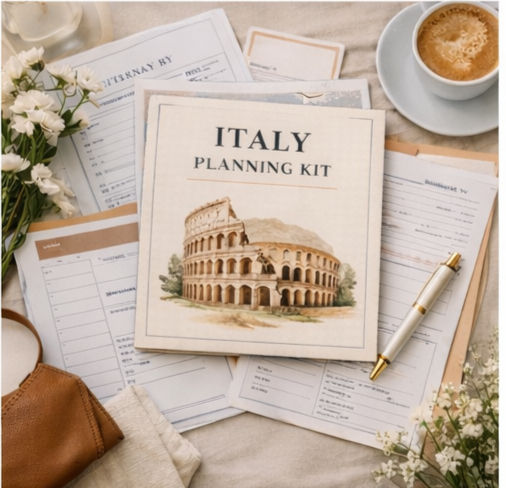
If you want the organized version of all of this, my 118-page Italy Planning Kit helps you map the trip clearly from the start, with pacing worksheets, itinerary templates, and planning pages designed to make the entire process feel calmer.
Step 4: Build Your Route Before You Book Hotels
Hotels are tempting. I know. But they should not be your first planning decision.
Start with your route.

Ask yourself:
where you are flying in and out
whether an open-jaw itinerary makes more sense
which destinations actually fit together well
whether you are traveling mostly by train, ferry, or car
how many hotel changes are really worth it
A strong route makes the entire trip feel more polished. It saves time, reduces friction, and helps the experience feel smoother from the moment you land.
Routes that work beautifully:
Rome + Florence + Venice A classic first-timer route with easy train connections
Rome + Naples + Capri or Amalfi Coast Excellent for history, food, and coastal beauty
Milan + Lake Como + Venice Ideal for style, scenery, and northern polish
Florence + Tuscany countryside + Bologna Perfect for food lovers and a slower, more grounded pace
Naples + Sicily A richer, moodier itinerary for travelers who want something a little less obvious
Try to make your itinerary flow geographically. Italy may look manageable on a map, but transit can pull more time and energy from the trip than people expect.
Styled & Miles Insider Tip: One of the quickest ways to improve an Italy itinerary is to remove one stop.
Step 5: Decide When to Take the Train and When to Rent a Car
This is one of the most important Italy planning decisions, and the answer is often both.
Take the train if:
you are visiting major cities
you want the easiest option
you do not want to deal with parking or driving restrictions
your route includes Rome, Florence, Venice, Milan, Naples, or Bologna
Rent a car if:
you are staying in the countryside
you want flexibility in smaller towns
your itinerary includes rural Tuscany, Puglia, or parts of Sicily
you are comfortable driving abroad
For many Italy trips, the smartest answer is to combine them. Train between the big cities. Rent a car only for the stretch where it genuinely improves the experience.
That tends to be the most elegant approach too.
Styled & Miles Insider Tip:
I would never rent a car in Italy just because it sounds romantic. In many places, the train is easier, prettier, and significantly less stressful.
Step 6: Book the Big Pieces in the Right Order
Once your route is clear, start booking the major pieces in a smart sequence.
1. Flights
Lock in your arrival and departure cities first.
2. Hotels or villas
Once flights are set, reserve your stays in your main bases.

3. Trains, ferries, or car rental
Then organize how you will move between destinations.
4. Top-priority reservations
This may mean museums, beach clubs, private guides, special restaurants, winery visits, or any experience you would be disappointed to miss.
5. Everything else
Leave room for spontaneity, but do not leave the important pieces too late.
Italy absolutely has room for wandering, but not every part of the trip should be left to chance. Popular hotels, summer ferries, iconic museums, and destination restaurants often book earlier than people expect.
Styled & Miles Insider Tip
I do not always do this in a perfectly strict order. Sometimes I like to look at my top-priority reservations before I lock in a hotel, because what I most want to do in a city often helps me decide where I most want to stay. A beautiful hotel is wonderful. A beautiful hotel in the wrong location is much less so.
Know what to book first. Once you have a season in mind, the next step is timing the important reservations before the best options disappear. I created a free Italy Booking Timeline to help you see what to book and when, so you can move from “we should probably start planning” to a trip that actually feels beautifully pulled together.
Step 7: Build a Daily Outline, Not an Hour-by-Hour Schedule
You do not need a rigid itinerary. You need shape.
I like to build each day around:
one major sight or anchor plan
one lunch or dinner priority
one neighborhood or area to explore
one open pocket of time
That gives the day structure without draining the life out of it.
A good Italy day still leaves room for:
aperitivo
wandering
scenic pauses
shopping
the unexpected detour that becomes your favorite part
What you do not want is an itinerary so packed that you spend the trip looking at the clock instead of the place in front of you.

Want a Simple Way to
Organize Each Day?
Grab my free Italy Daily Planner Page to map reservations, neighborhoods, meals, and must-see stops without over-planning the pleasure out of the trip.
Step 8: Reserve the Things You Would Be Disappointed to Miss
Not everything in Italy needs to be booked months in advance. Some things absolutely do.
Depending on your trip, that may include:
major museums and landmarks
high-demand restaurants
beach clubs
ferries in busy season
wine tastings
cooking classes
private boat days
airport transfers in harder-to-navigate destinations
The goal is not to overbook every hour. The goal is to reserve the pieces that matter most to you.
That is a much better way to plan.
Keep the Important Details
in One Place
My Italy Planning Kit includes booking trackers, itinerary pages, and planning worksheets designed to help you organize the trip before it starts to feel messy.
Step 9: Think Through the Practical Details Before You Leave
This is the part of planning that is less glamorous and incredibly useful.
Before you leave, know:
how you are getting from the airport to your hotel
what documents you need
how you will access money
whether your phone plan works abroad
what chargers and adapters you need
which shoes make sense for your itinerary
whether your hotel has stairs, porter service, or car access
what you need for arrival day and departure day
Italy feels much better when you are not figuring all of that out while jet-lagged, undercharged, and standing beside your luggage on a curb.
Travel well starts here.
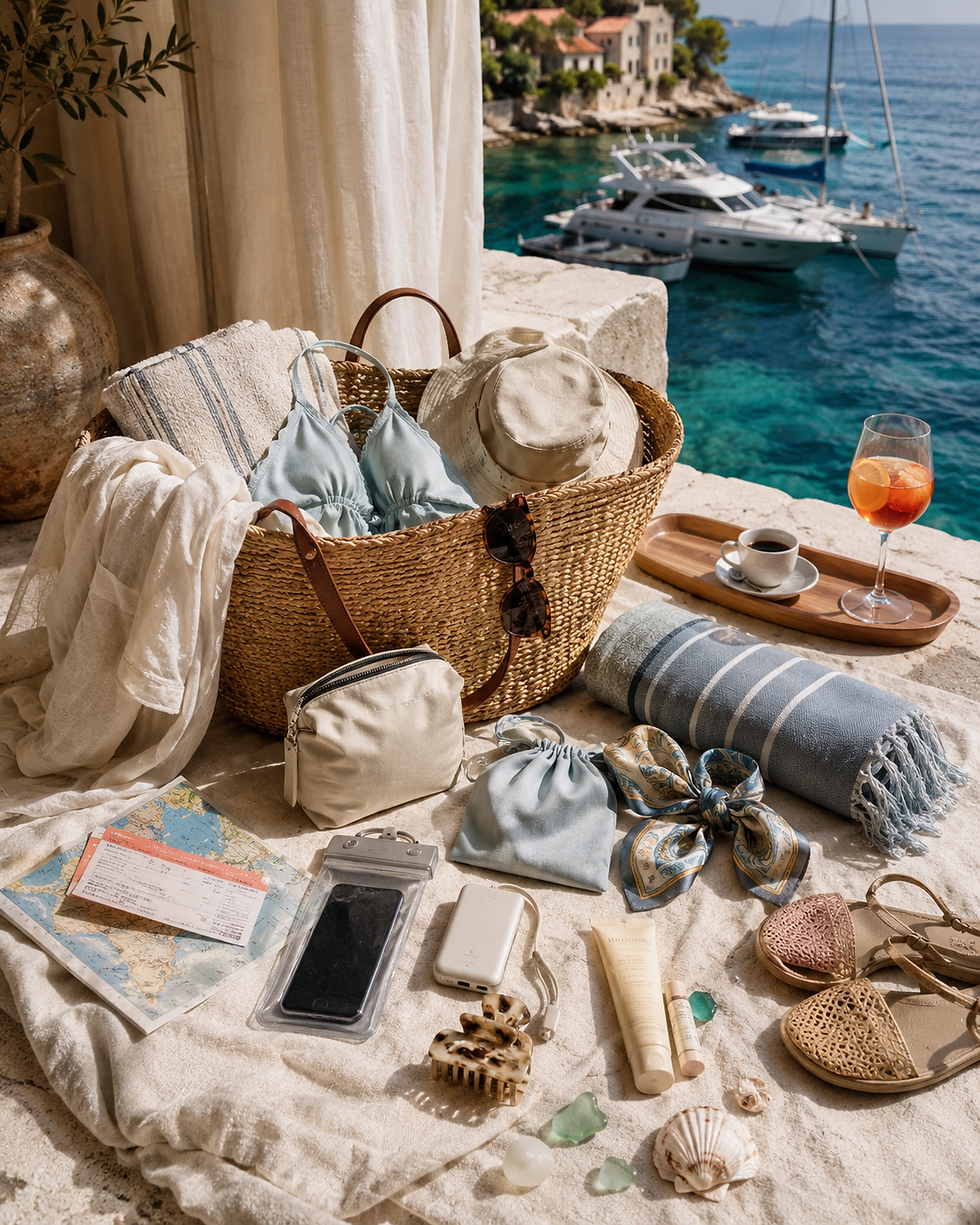
My Italy Travel Essentials
These are the little things that quietly make the trip run better once you are on your way.
Step 10: Pack for Your Actual Trip, Not Your Fantasy Trip

Italy packing deserves its own full guide, but it is part of planning well too.
Pack for:
the cities you are actually visiting
the weather you are actually getting
your transfer days
your dinner plans
how much walking you are doing
whether you are checking a bag or traveling carry-on only
Do not pack for a vague vision of “European summer” if your trip is really spring in Florence, ferry days in Capri, and long city walks in Rome.
Italy often rewards a more polished approach to dressing, but that does not mean bringing more. It means bringing better.
Think:
comfortable but polished walking shoes
layers
a few elevated basics
day-to-night pieces
one or two smarter looks for dinner
accessories that make simple outfits feel finished
A lightweight knit over the shoulders in spring. A crisp linen set in summer. A blazer, denim, and beautiful flats in fall. Style helps, but practicality matters too. The best Italy packing is always the version that lets you move easily and still feel like yourself.
Styled & Miles Insider Tip: The most stylish suitcase is rarely the biggest one. It is the one packed with intention.
Related Italy Packing Reads:
Step 11: Keep Your Confirmations in One Place
Every Italy trip gets easier when you are not hunting through email for reservation numbers on a train platform.
Keep your:
flights
hotel addresses
train tickets
ferry bookings
museum entries
restaurant reservations
transfer details
notes and backup plans
all in one place. Whether that is a shared note, a digital folder, or a printable planner, the goal is the same: reduce friction. That is exactly why people love a good planning tool. It is not just about information. It is about clarity.
Prefer Everything Organized From the Start?
If you want the clearer, more pulled-together version of this process, my
Italy Planning Kit
helps you keep your route, reservations, packing notes, and daily plans in one place.

Step 12: Leave Room for Italy to Surprise You
This may be the most important part of planning an Italy trip. Yes, plan well. Yes, reserve what matters. Yes, know your route. But once you get there, leave some room.
For the lunch that runs long.For the piazza you were not planning to stop in.For the shop you nearly walked past.For the extra glass of wine.For the hour that was never on the itinerary and somehow becomes the part you remember best.
Italy is not a destination to conquer. It is a destination to settle into, even if only briefly.
That is usually when it becomes unforgettable.
Final Thoughts on How to Plan an Italy Trip
The best way to plan a trip to Italy is to start with the kind of experience you want, build a route that makes sense, pace it realistically, reserve what matters, and pack for the trip you are actually taking.
Do that, and Italy begins to feel less overwhelming and much more exciting. That is the version of planning I always want. The one that makes the trip feel better before it even begins.

Start Planning Your Italy Trip
Begin with the free checklist
Download the Italy Trip First-Timer Checklist for a clear, polished starting point.
If you want the organized , more comprehensive version of all of this,
my Italy Planning Kit helps you map the trip clearly from the start, with itinerary pages, planning worksheets, packing checklists, and booking trackers designed to make the process feel lighter.



Comments